
Vegetable Preservation Methods Cost Benefit Analysis: Winter
Vegetable preservation methods cost benefit analysis: freezing, pickling, fermenting or root cellaring compared on upfront and running costs, with ADEME data.
By The GreenEats Zone editorial team
·10 min read·Updated
In this article
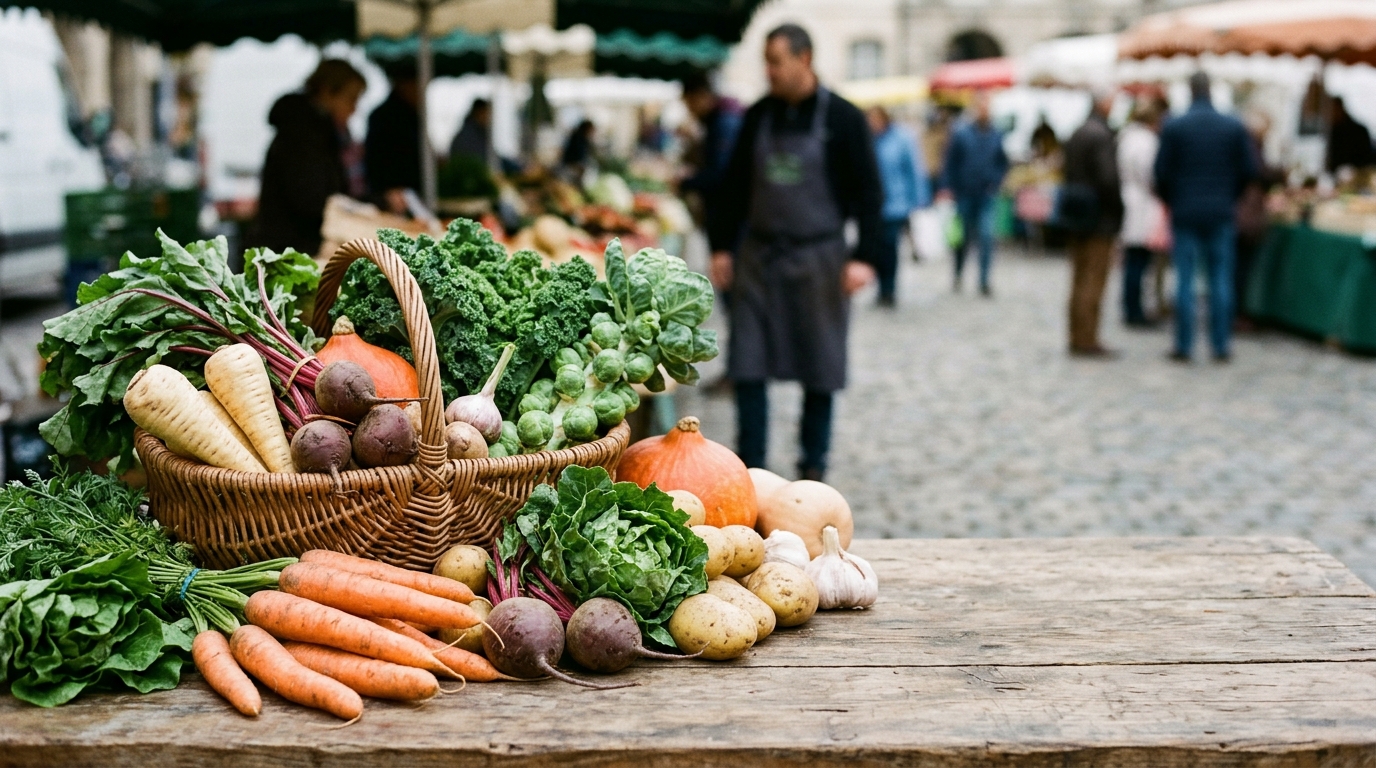
In October 2026, 39 fruits and vegetables are in season in France (ADEME, Impact CO2 API, 2026-10-22), and a €40 fermentation crock filled with cheap seasonal cabbage can pay for itself in a single batch. Freezing, pickling and fermenting each break even within one season when applied to in-season vegetables bought in bulk. The decisive variable is not the method itself but whether you already own the equipment. A chest freezer already in use costs roughly nothing extra per batch; a fermentation crock bought new needs two to three full batches to pay back its purchase price in avoided food waste.
Why October Is the Right Moment to Preserve
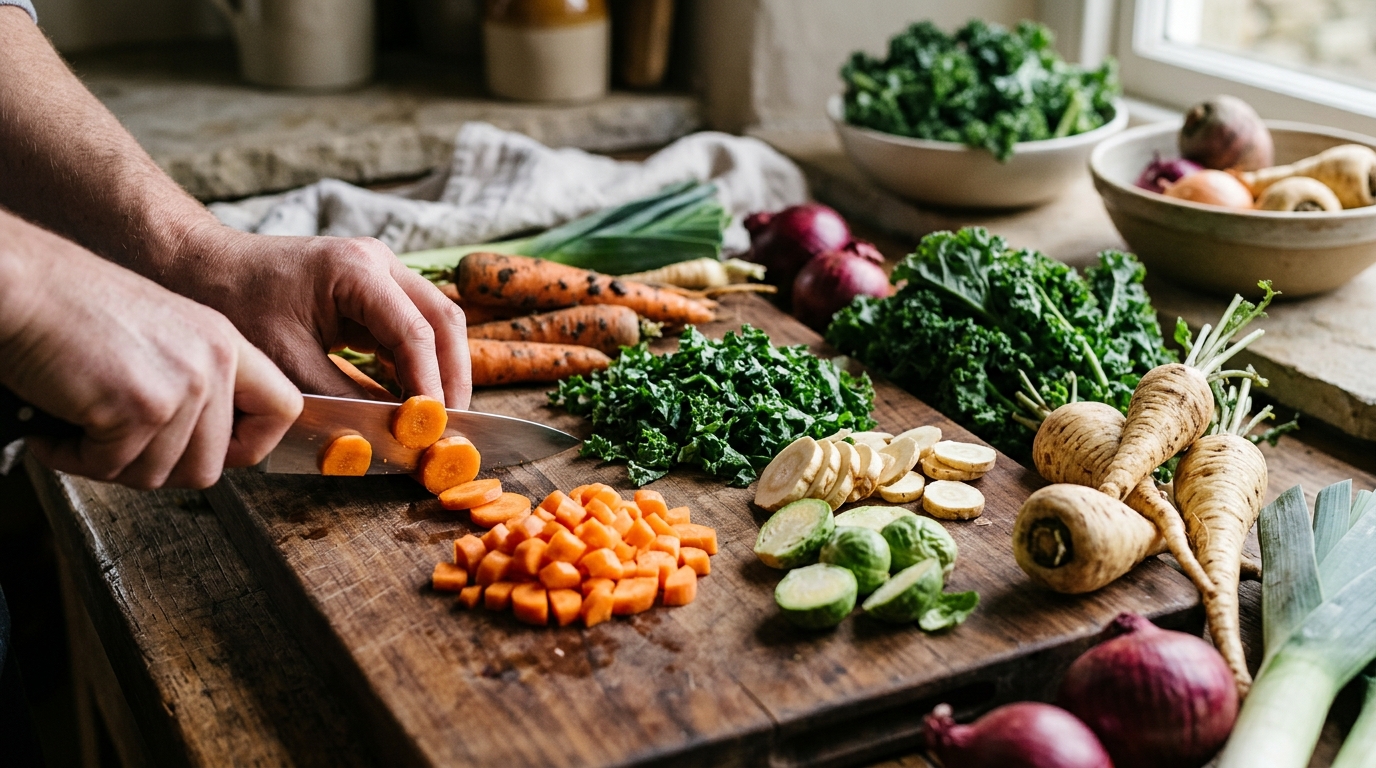
According to ADEME's Impact CO2 API (seasonal produce data retrieved 2026-10-22), 39 fruits and vegetables are currently in season in France. The list includes apples, quinces, figs, pears, beetroot, chard, carrots, celery, mushrooms (raw morel) and cabbage. These are also the vegetables that respond best to home preservation: dense, low in moisture relative to summer produce, and abundant enough to buy in volume at reduced prices.
Acting in October rather than November matters for one practical reason: in-season gluts drive market prices down, widening the cost gap between preserving now and buying preserved equivalents later in the winter. A kilogram of carrots bought at a farm market in October typically costs a fraction of the price of the same carrot preserved commercially and sold in February.
The environmental case is equally strong. ADEME's Agribalyse database (synthesis, 2025-02-27) does not publish a single figure for "out-of-season imported carrot" versus "locally grown October carrot," but it does confirm the general principle: supply chain distance and greenhouse growing energy are the dominant drivers of climate impact for vegetables. Preserving what grows locally in season locks in the low-carbon moment.
The Three Core Methods: How They Compare
Freezing
Freezing is the most accessible entry point. If a chest or upright freezer is already running in the household, the marginal cost of filling it with blanched carrots, cabbage or beetroot is limited to the electricity needed for blanching and the cost of freezer bags or reusable containers.
The limitation is energy. A typical household chest freezer (150–200 litres) draws roughly 0.3–0.5 kWh per day. A full winter's preservation run — say, four months from November to February — adds around 36–60 kWh of consumption attributable to the freezer's operation. At average European household electricity rates, this is a modest but real recurring cost. The method works best when the freezer would run regardless, and the preserved vegetables simply fill space that would otherwise sit empty.
Freezing is also the least forgiving method for texture. Root vegetables and brassicas survive well if blanched first (90 seconds in boiling water, then an ice bath). Skipping blanching accelerates enzyme activity and degrades texture within weeks rather than months.
Lacto-Fermentation
Lacto-fermentation — salt, vegetables, an airtight vessel and time — has no electricity cost and, once the jars are owned, almost no running cost beyond salt. A one-litre Weck or Mason jar costs a few euros and lasts decades. The salt required for a kilogram of cabbage (roughly 20 g at a 2% brine ratio) costs less than a few cents.
The upfront investment is the crock or jar set. A dedicated ceramic fermentation crock (2–5 litres) costs between €25 and €60 new. This cost is recovered within one or two batches of fermented cabbage or carrot when compared with purchasing the equivalent volume of commercial sauerkraut or kimchi.
Fermentation also adds a nutritional dimension that freezing does not: live lactic acid bacteria. This is not a cost-benefit factor in the financial sense, but it does affect the perceived value of the output and makes fermented preserves more versatile in cooking.
Pickling (Vinegar-Based)
Vinegar pickling is faster than fermentation and safer for beginners because the acidic environment is immediate rather than developing over days. The recurring costs are white wine or cider vinegar, sugar, salt and spices. A 750 ml bottle of cider vinegar sufficient to pickle roughly 1.5 kg of vegetables costs around €1.50–€2.00.
The equipment investment is similar to fermentation: sterilised glass jars with metal lids. New lids are required each season (around €0.20–€0.50 per lid); jars themselves are reusable indefinitely if unchipped.
Pickled beetroot, pickled celery and pickled cabbage are all October-optimal, matching the current seasonal window (ADEME, Impact CO2 API, 2026-10-22). Pickled vegetables keep for 6–12 months in a cool, dark pantry without any electricity.
Root Cellaring and Cool Storage
For dense root vegetables — carrots, beetroot, celeriac — cool dark storage (a garage, basement or unheated pantry between 0°C and 5°C) extends shelf life by months with zero energy cost and zero equipment investment beyond wooden crates and sand or damp newspaper.
This method is the lowest-cost option by a significant margin, but it requires suitable physical space and consistently cold temperatures. It does not apply to cabbage leaves or chard, which need processing to preserve.
Cost-Benefit Reference Table
| Method | Typical upfront equipment cost | Recurring cost per kg preserved | Electricity required | Source |
|---|---|---|---|---|
| Freezing (existing freezer) | €0 (marginal) | €0.05–€0.15 (bags + energy share) | Yes — continuous | ADEME, Impact CO2 API, 2026-10-22 (seasonal context); energy estimates indicative |
| Lacto-fermentation | €5–€60 (jars or crock) | <€0.10 (salt only) | No | ADEME, Impact CO2 API, 2026-10-22 |
| Vinegar pickling | €5–€30 (jars + lids) | €0.30–€0.80 (vinegar, sugar, lids) | Minimal (sterilisation) | ADEME, Impact CO2 API, 2026-10-22 |
| Cool storage (root vegetables) | €0–€10 (crates, sand) | ~€0 | No | ADEME, Impact CO2 API, 2026-10-22 |
The Carbon Dimension: Preservation vs. Buying Out of Season
Any honest cost-benefit analysis of home preservation must account for carbon, not just euros. ADEME's Agribalyse database (synthesis, 2025-02-27) gives precise climate change impact figures for a range of cooked and processed foods. While it does not publish a dedicated figure for "pickled carrot" versus "air-freighted February carrot," the framework is instructive.
Consider the baseline: cooked white rice registers 1.2 kg CO2e per kg (ADEME, Agribalyse, 2025-02-27). Cooked lentils — one of the lowest-impact protein sources tracked — register just 0.5 kg CO2e per kg (ADEME, Agribalyse, 2025-02-27). Raw chicken reaches 4.6 kg CO2e per kg, and raw minced beef (15% fat) reaches 35.7 kg CO2e per kg (ADEME, Agribalyse, 2025-02-27).
The point of the comparison is scale: even a modest shift from high-impact proteins toward plant-based, preserved seasonal vegetables represents a meaningful carbon reduction. Home-preserved October carrots or fermented cabbage — both currently in season — contribute negligible processing emissions compared with any animal protein.
For a deeper breakdown of how plant-based diets affect land use and water consumption beyond carbon alone, the analysis at Plant-Based Diet Environmental Impact: Water and Land provides a useful complement to Agribalyse's CO2 figures.
Steps to Follow
- Audit what is in season now. Cross-reference your local market with the ADEME Impact CO2 API seasonal list. In October 2026, 39 items are in season in France, including carrots, beetroot, cabbage, celery and chard — all high-value preservation candidates.
- Assess your existing equipment. Do you have a chest freezer with spare capacity? Glass jars from previous seasons? A cool, dark basement? Your available equipment determines which method costs you least to start.
- Buy in bulk at market price. A single 5 kg bag of carrots or a whole cabbage head purchased at a farm or market in October will cost substantially less per kilogram than the same produce bought retail in January.
- Match method to vegetable. Cabbage → fermentation or pickling. Carrots → freezing, pickling or cool storage in sand. Beetroot → pickling or freezing. Celery → freezing (blanched) or pickling. Chard → freezing only (too delicate for pickling).
- Label everything with date and method. Frozen vegetables are best used within 8–12 months. Pickled vegetables keep 6–12 months. Fermented vegetables keep 3–6 months in a refrigerator once opened, longer if kept sealed in a cold pantry.
- Track your actual savings. Note the price paid per kilogram at purchase and the retail equivalent in January or February. The difference, multiplied by total kilograms preserved, is your season's return on the equipment investment.
Example: Calculating the ROI of a Fermentation Setup
Example: A home cook purchases a 3-litre ceramic fermentation crock for €40 and 5 kg of October cabbage at €1.20/kg (€6 total). Salt cost is negligible (100 g at 2% brine across multiple batches). The 5 kg of cabbage yields approximately 4 kg of finished sauerkraut. The equivalent commercial sauerkraut retails at roughly €3.50–€5.00 per 500 g jar, meaning 4 kg of output has a retail equivalent value of €28–€40. The crock pays for itself in one batch. Every subsequent batch — across an estimated 5–10 production runs per year — generates net savings of €22–€34 per 5 kg of raw cabbage processed, with zero ongoing electricity cost.
Common Mistakes That Destroy the Cost-Benefit Case
- Buying specialist equipment you don't need. A Mason jar with a loose lid works for most fermentation. An expensive airlock crock is optional, not mandatory.
- Over-preserving beyond consumption capacity. Preserved food that goes uneaten is waste in another form. Plan quantities against realistic weekly consumption across the winter months. The guides at Food Waste by Meal Type Analysis and Meal Planning Templates to Reduce Food Waste offer frameworks for estimating how much preserved produce a household realistically uses.
- Skipping blanching before freezing. Unblanched frozen vegetables degrade in 4–6 weeks. Blanching adds 3 minutes per batch and extends quality life to 8–12 months.
- Forgetting to account for pantry space. Pickling and fermentation require cool, dark shelf space. If your pantry is warm (above 18°C), product quality declines faster and safety margins shrink for fermentation.
Frequently asked questions
Is freezing or fermenting cheaper for preserving winter vegetables?
Fermenting is cheaper to run: it uses no electricity and requires only salt and jars. Freezing has near-zero marginal cost if a freezer already runs in the household, but electricity adds up over a full winter. For someone starting from scratch, a basic jar set for fermentation (under €15) costs less than a dedicated freezer and pays back within one or two batches of cabbage or carrots.
Which vegetables are best suited to fermentation this month?
According to ADEME's Impact CO2 API (2026-10-22), cabbage, carrots, beetroot and celery are all in season in France in October — and all are excellent fermentation candidates. Cabbage produces sauerkraut or kimchi-style preparations. Carrots and beetroot ferment well in 2% brine. Celery works as a lacto-fermented condiment or brine addition.
How does home preservation compare to buying commercially preserved vegetables in carbon terms?
ADEME's Agribalyse database (2025-02-27) does not publish a direct figure for home-preserved versus commercially preserved vegetables. However, the database confirms that transport distance and energy-intensive growing conditions are the main carbon drivers for vegetables. Preserving locally grown, in-season produce at home avoids both factors, making the home-preserved option systematically lower-impact than importing out-of-season equivalents.
What is the minimum equipment investment to start preserving this month?
For cool storage: €0 if you have a garage or basement between 0°C and 5°C. For fermentation: 4–6 glass jars with loose-fitting lids, costing €5–€15 total. For pickling: the same jars plus vinegar and lids, total under €20 for a first season. Freezing requires an existing freezer; buying one new solely for preservation is rarely cost-effective unless the household is large.
How long do home-preserved vegetables last compared to fresh?
Fresh October root vegetables stored unwashed in a cool place last 2–4 weeks. Frozen blanched vegetables last 8–12 months. Vinegar-pickled vegetables last 6–12 months sealed. Lacto-fermented vegetables last 3–6 months refrigerated after opening, longer if kept sealed in a cold (under 10°C) environment. All preserved forms significantly extend the usable life of the October seasonal glut.
Does home food preservation reduce food waste in measurable ways?
Yes. By converting perishable in-season produce into shelf-stable or frozen formats, preservation directly prevents spoilage that occurs when fresh vegetables are held beyond their natural shelf life. Structuring a weekly meal plan around preserved batches further reduces the risk of forgetting what is in the pantry or freezer — a common source of avoidable household food waste.
GreenEats Zone est édité par ENN Consulting SAS
Recommended reads
More in Food waste reduction at home →
Leftover Meal Plans Cost Savings: Weekly Budget Breakdown
How much can leftover meal plans really save you each week? A data-driven breakdown using ADEME Agribalyse footprint data and real cooking costs.
Home Composting Cost Benefit Analysis
Is home composting worth it? Our home composting cost benefit analysis breaks down setup costs, fertilizer savings, and carbon impact so you can decide.
Food Waste by Meal Type Analysis
A food waste by meal type analysis: discover which meals waste most — vegetables, bread, leftovers — with regional data, a comparison table, and actionable tips.
Why Does Food Spoil Faster in Summer Heat?
Summer heat accelerates bacterial growth on food. Learn the science behind spoilage and 12 storage solutions to keep your meals safe all season.