
Local Farm Membership Cost Comparison Annual: What You Actually Save Over 12 Months
Is a CSA or farm buying club cheaper than the supermarket? A data-driven annual food budget breakdown using ADEME Agribalyse figures and seasonal produce data.
By The GreenEats Zone editorial team
·10 min read
In this article
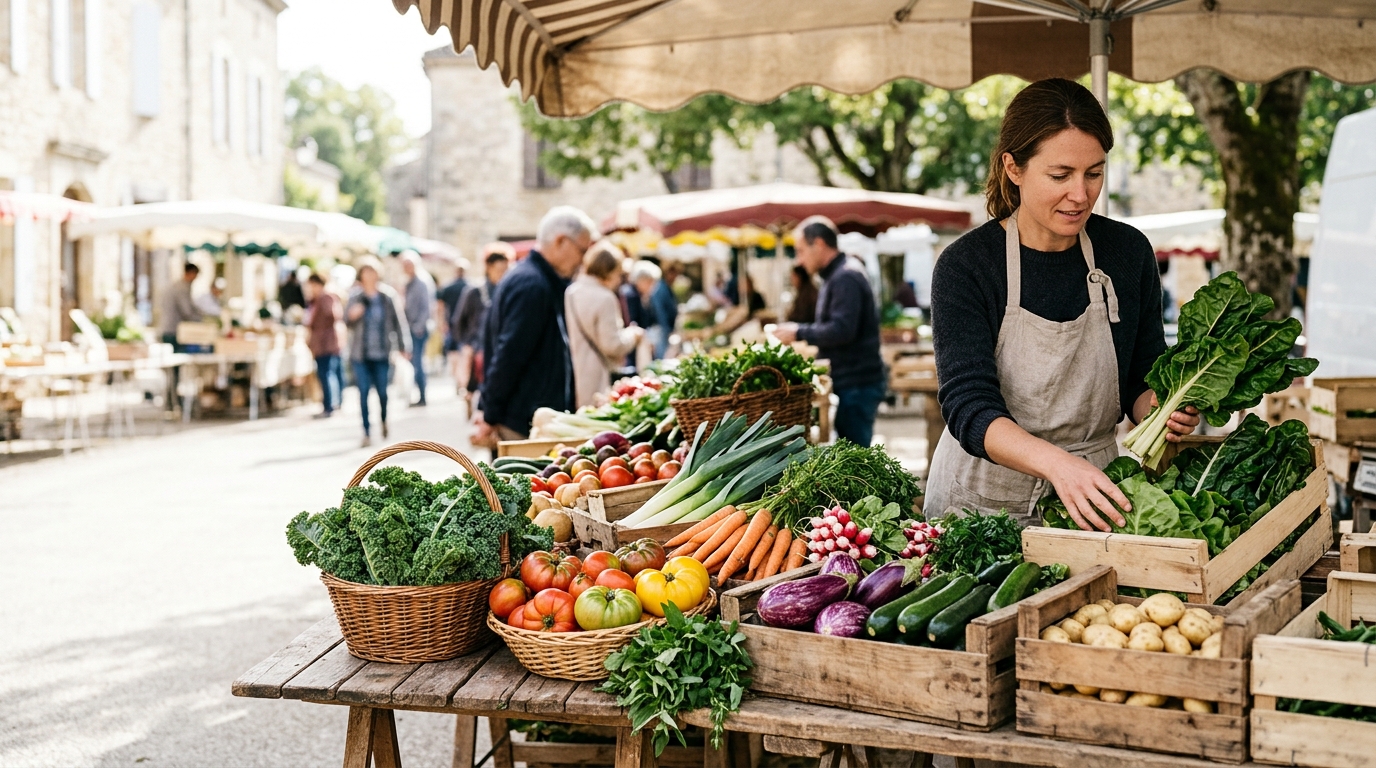
Joining a local farm or CSA typically costs a two-person household between €600 and €1,200 per year in upfront share payments, compared with a broader but often less structured supermarket spend on the same food categories. Whether that represents a saving depends on basket composition, waste rate, and how systematically you use seasonal produce — none of which supermarket receipts reveal automatically.

Why the "Local Is Cheaper" Assumption Needs Evidence
The intuition that buying directly from a farm cuts costs is widespread but imprecise. Farm-direct pricing removes several retail markups — logistics aggregation, packaging, shelf space, promotional margin — but it replaces them with different cost structures: annual or seasonal share payments made in advance, possible delivery or pick-up logistics, and a fixed basket composition that you do not choose week by week.
The honest comparison must therefore account for three variables that most lifestyle articles ignore:
- Basket equivalence — are you comparing the same quantities and categories of food?
- Waste differential — CSA members who plan meals around a fixed weekly box often waste less; supermarket shoppers who buy speculatively waste more.
- Protein composition — the single largest lever on both budget and carbon footprint is not which shop you use, but what protein sources you buy.
ADEME's Agribalyse database makes the protein point with unusual precision. Cooked lentils emit 0.5 kg CO2e per kilogram of product; cooked chickpeas emit 0.6 kg CO2e/kg; plain tofu reaches 1.0 kg CO2e/kg. Raw chicken sits at 4.6 kg CO2e/kg. Raw ground beef (15% fat) reaches 35.7 kg CO2e/kg (ADEME, Agribalyse, 2025-02-27). The carbon gap between a lentil-centred week and a beef-centred week is a factor of more than 70 — dwarfing any difference between farm-direct and supermarket sourcing channels for the same product.
The Carbon and Cost Profile of In-Season Produce
Seasonality is where local sourcing delivers its clearest, most measurable benefit. As of November 2026, 39 fruits and vegetables are in season in France, including apple, clementine, kiwi, mandarin, beetroot, chard, carrot, celery, raw morel mushroom, and cabbage (ADEME, Impact CO2 API, 2026-11-15). In-season produce sourced locally avoids the emissions associated with heated greenhouse production and long-haul refrigerated transport — two of the largest contributors to the food-system carbon footprint for out-of-season items.
From a budget standpoint, seasonal abundance lowers farm-gate prices: a local grower selling the week's harvest surplus through a buying club or CSA share passes that price signal directly to the member. The same carrot or cabbage at a supermarket in peak season is priced against a national or European average that smooths out local gluts.
| In-season item (November, France) | Climate impact (kg CO2e/kg) | Source |
|---|---|---|
| Lentil, cooked | 0.5 | ADEME, Agribalyse, 2025-02-27 |
| Chickpea, cooked | 0.6 | ADEME, Agribalyse, 2025-02-27 |
| Tofu, plain | 1.0 | ADEME, Agribalyse, 2025-02-27 |
| White rice, cooked, unsalted | 1.2 | ADEME, Agribalyse, 2025-02-27 |
| Chicken, raw | 4.6 | ADEME, Agribalyse, 2025-02-27 |
| Ground beef, 15% fat, raw | 35.7 | ADEME, Agribalyse, 2025-02-27 |
| In-season produce count, France, November 2026 | 39 items | ADEME, Impact CO2 API, 2026-11-15 |
The figures above are drawn from ADEME's Agribalyse synthesis (published 2025-02-27) and the ADEME Impact CO2 seasonal produce tool (data retrieved 2026-11-15). They cover the climate change impact category only; other environmental dimensions (water use, land use, biodiversity) are not included in this table.
Annual Budget Breakdown: Farm Membership vs Supermarket
Building a credible annual comparison requires fixing the household type and basket assumptions. The example below uses a two-adult household consuming roughly 150 kg of vegetables and fruits, 40 kg of legumes and grains, and 25 kg of protein sources per year — a nutritionally adequate, moderately plant-forward diet.
CSA / farm buying club structure (illustrative):
- Seasonal vegetable share: typically paid as one or two lump sums covering 20–40 weekly boxes during the growing and storage season.
- Supplementary purchases: items not covered by the share (tropical fruit, year-round staples, pantry) bought from other sources.
- Logistics cost: pick-up at a local drop point (often free) or home delivery (variable surcharge).
Supermarket structure (illustrative):
- Full flexibility, no upfront commitment.
- Higher unit prices for premium or organic lines; lower unit prices for commodity produce.
- No built-in incentive to use seasonal or local items; promotional pricing often favours processed or imported goods.
Example: A two-person household spends approximately €18 per week on vegetables and fruit at a conventional supermarket, totalling roughly €936 per year. A comparable CSA share covering 30 weeks of seasonal produce costs between €15 and €22 per week depending on the farm and region, with an additional €8–12 per week spent on supplementary items outside the share season — producing an annual outlay in a similar range of €870 to €1,020. The net financial difference before waste adjustment is therefore small: between a saving of roughly €66 and an overspend of roughly €84. The meaningful difference emerges from waste. Households that use a fixed weekly box and plan meals accordingly typically report spoiling a smaller proportion of perishables than households buying speculatively at a supermarket. If a CSA member wastes 10% of purchased produce rather than a commonly cited 20% for supermarket shoppers, the effective cost per usable kilogram falls significantly — without any change in nominal price.
Switching one weekly beef-based meal (approximately 300g raw per person, twice a week) to a lentil-based meal saves the equivalent of roughly 40 kg CO2e per person per year — more than the annual footprint of a return flight from Paris to Marseille in economy class — based on the Agribalyse figures cited above (ADEME, Agribalyse, 2025-02-27).
For a deeper look at how plant-based proteins compare on both cost and carbon across serving sizes, see Plant-Based Meat Cost Per Serving Legumes Comparison.
The Hidden Variable: Food Waste and Storage
The food waste differential between local farm membership and supermarket shopping is the factor most analyses underweight. A fixed CSA box creates a planning discipline that loose supermarket shopping does not: you receive what the farm harvests, not what you feel like buying. Members who treat the box as a weekly meal-planning anchor — building dinners around beetroot and chard in November rather than asparagus shipped from Peru — systematically reduce the gap between purchased and consumed food.
Proper storage of the box contents extends the savings further. Root vegetables like carrots, beetroot, and celeriac keep for several weeks under correct conditions (cool, dark, slightly humid). Leafy chard is more perishable but blanches and freezes well for later use. Cabbage is among the most storage-resilient brassicas available in the November basket.
For practical guidance on reducing spoilage costs, the article on extending vegetable freshness and weekly cost savings provides storage-method-by-vegetable breakdowns that apply directly to typical CSA basket contents.
Environmental Payoff: Putting the Numbers in Context
The carbon comparison between local farm membership and supermarket shopping is not straightforwardly in favour of the farm. Transport emissions from a consumer driving 30 km each way weekly to a farm pick-up point can exceed the transport savings from local sourcing. The key factors are:
- Pick-up logistics: a shared drop point within walking or cycling distance maximises the carbon benefit.
- Basket carbon intensity: a local farm basket heavy in seasonal vegetables and legumes will always outperform a supermarket basket heavy in beef and air-freighted produce — regardless of sourcing channel.
- Packaging: farm boxes typically use less single-use plastic, which reduces downstream waste impacts.
The clearest environmental wins therefore come from combining local sourcing with a protein shift toward legumes. A November dinner of braised cabbage and lentils — both items in season and available from local farms — carries a climate footprint several orders of magnitude below an equivalent portion of beef stew, based on Agribalyse data (ADEME, Agribalyse, 2025-02-27).
For a broader analysis of how farm-to-table supply chains affect carbon accounting, the farm to table carbon footprint analysis guide covers distance, packaging, and supply chain stages in detail.
Steps to Follow
- Audit your current food spend. Print or export three months of supermarket receipts and categorise by food type: produce, protein, dairy, dry goods, processed food. Identify your average weekly spend on fresh produce and protein separately. This baseline is essential — without it, any comparison with a farm share is speculative.
- Map local options. Search for CSA schemes, buying clubs, and farmers markets within a reasonable logistics radius. Note the share structure (weekly, bi-weekly, seasonal), the basket contents typical for each season, and the total annual or seasonal cost. Check whether a pick-up point is within walking or cycling distance, since your transport footprint matters.
- Calculate your effective cost per usable kilogram. Take the share price, divide by the net weight after spoilage you realistically expect to use, and compare that figure with your current effective cost per usable kilogram of equivalent supermarket produce (factoring in your current waste rate). This single figure — cost per usable kg — is the honest unit of comparison.
- Shift your protein baseline. Regardless of which sourcing channel you choose, replacing two beef-centred meals per week with lentil or chickpea-centred meals reduces your annual food carbon footprint by a larger margin than any sourcing switch alone, based on Agribalyse climate impact data (ADEME, Agribalyse, 2025-02-27).
- Track for one full season. Join a half-share or trial share for one season (typically 10–15 weeks) before committing to a full annual membership. Record actual spend, actual waste, and meal satisfaction. At the end of the trial, recalculate cost per usable kg and compare with your pre-audit baseline.
- Review certification and production claims. Local does not automatically mean organic, low-input, or environmentally certified. When evaluating a farm, ask about production methods and look for recognised labels. The local farm certification labels explained (2026) article covers the main schemes operating in France and what each label verifiably guarantees.
Frequently asked questions
Is a CSA share always cheaper than a supermarket for the same food?
Not always. Nominal share prices are often competitive, but the comparison must account for basket equivalence, logistics costs, and your actual waste rate. Households that plan meals rigorously around a fixed weekly box typically achieve a lower effective cost per usable kilogram than equivalent supermarket shoppers. Households that let CSA produce spoil due to poor planning may end up spending more in real terms.
How much carbon does switching from beef to lentils actually save?
According to ADEME's Agribalyse database (published 2025-02-27), raw ground beef emits 35.7 kg CO2e per kilogram, while cooked lentils emit 0.5 kg CO2e per kilogram — a ratio of more than 70 to one. Replacing 300g of beef per person per week with an equivalent protein portion of lentils saves roughly 20 kg CO2e per person per month, a meaningful fraction of the average French person's annual food-related carbon footprint.
What is in season in France in November and where does that data come from?
As of November 2026, 39 fruits and vegetables are in season in France, including apple, clementine, kiwi, mandarin, beetroot, chard, carrot, celery, raw morel mushroom, and cabbage. This data comes from the ADEME Impact CO2 API for seasonal produce, retrieved 2026-11-15, and is available via the official ADEME Impact CO2 tool for fruits and vegetables.
Do I need to commit for a full year with a CSA?
Most CSA schemes and buying clubs operate on a seasonal basis — typically a spring-summer season and an autumn-winter storage season — rather than a strict calendar year. Many farms offer half-shares or trial memberships for first-time members. It is advisable to trial one season before committing to a full annual or dual-season share to verify that the basket composition fits your household's cooking habits and budget.
Does local sourcing automatically reduce my food carbon footprint?
Not automatically. The carbon benefit depends on transport mode and distance, packaging, farm production methods, and — most critically — the carbon intensity of the food itself. A local share heavy in seasonal vegetables will have a far lower footprint than a supermarket basket heavy in beef. Protein composition is the dominant variable: Agribalyse data (ADEME, 2025-02-27) shows beef at 35.7 kg CO2e/kg versus 0.5 kg CO2e/kg for lentils.
How do I find legitimate CSA schemes or farm buying clubs near me?
In France, local chambers of agriculture and the national agriculture ministry maintain directories of short food supply chains. Regional AMAPs (Associations pour le Maintien d'une Agriculture Paysanne) are the most widespread form of CSA and are searchable through officially registered networks. Farmers markets authorised by local authorities are another entry point that requires no upfront share commitment and lets you evaluate seasonal availability before joining a scheme.
GreenEats Zone est édité par ENN Consulting SAS
Recommended reads
More in Local sourcing and seasonal food →
Plant-Based Meat Cost Per Serving Legumes Comparison
Plant-based meat cost per serving legumes comparison: real French prices and ADEME Agribalyse footprints to find the cheapest, lowest-carbon plant protein.
Extend Vegetable Freshness: Cost Savings Per Week
Practical storage hacks to extend vegetable freshness and cut food waste costs. Backed by ADEME Agribalyse data on food carbon impact. Save money every week.
Vegetable Preservation Methods Cost Benefit Analysis: Winter
Vegetable preservation methods cost benefit analysis: freezing, pickling, fermenting or root cellaring compared on upfront and running costs, with ADEME data.
Plant-based diet environmental impact comparison
How much lower is the carbon footprint of a plant-based diet environmental impact comparison vs meat? Data-driven analysis by food category, with lifecycle figures and guidance.